
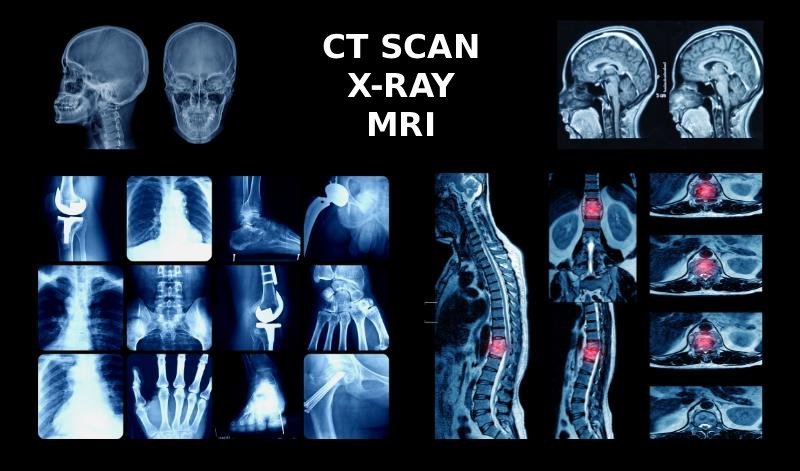
Medical imaging plays a vital role in modern healthcare by enabling early detection, accurate diagnosis, and effective treatment planning. Among the most commonly used imaging modalities are CT scans, MRI, X-rays, Ultrasound, and Mammography—each serving a specific clinical purpose.
Understanding the strengths of different imaging modalities helps healthcare providers choose the right investigation and ensures optimal patient outcomes.
CT Scan: Fast and Detailed Imaging
Computed Tomography (CT) scans provide detailed cross-sectional images of the body and are widely used in emergency and trauma settings. CT imaging is essential for evaluating brain injuries, chest conditions, abdominal pathologies, and vascular diseases.
CT scans offer rapid image acquisition and are often the first choice for urgent clinical situations requiring quick diagnosis.
MRI: High-Resolution Soft Tissue Imaging
Magnetic Resonance Imaging (MRI) is known for its superior soft tissue contrast and detailed visualization of organs, muscles, nerves, and joints. MRI is commonly used in neurological, musculoskeletal, spinal, and abdominal evaluations.
Unlike CT, MRI does not use ionizing radiation, making it suitable for detailed and follow-up examinations.
X-Ray: The Foundation of Medical Imaging
X-ray imaging remains one of the most widely used diagnostic tools due to its speed, accessibility, and cost-effectiveness. It is commonly used for chest examinations, bone injuries, and routine diagnostic assessments.
X-rays play a critical role in emergency care, outpatient diagnostics, and screening programs.
Ultrasound: Real-Time and Radiation-Free
Ultrasound imaging uses sound waves to produce real-time images of internal organs and soft tissues. It is frequently used in obstetrics, abdominal imaging, vascular studies, and guided procedures.
Ultrasound is safe, non-invasive, and suitable for patients of all ages.
Mammography: Early Detection of Breast Conditions
Mammography is a specialized imaging modality used for the early detection and diagnosis of breast diseases. Screening and diagnostic mammography are essential components of breast health programs.
Advanced techniques such as digital mammography and 3D tomosynthesis improve lesion detection and diagnostic accuracy.
How Teleradiology Supports All Imaging Modalities
Teleradiology services enable healthcare facilities to access expert reporting across all imaging modalities without on-site constraints. Remote radiology reporting ensures fast turnaround times, consistent quality, and access to subspecialty expertise.
With secure PACS/RIS integration, imaging studies are transmitted safely and interpreted by qualified radiologists.
Conclusion
CT, MRI, and other imaging modalities form the backbone of modern diagnostic medicine. By understanding their applications and leveraging teleradiology services, healthcare providers can ensure accurate diagnosis, efficient workflows, and improved patient care.